
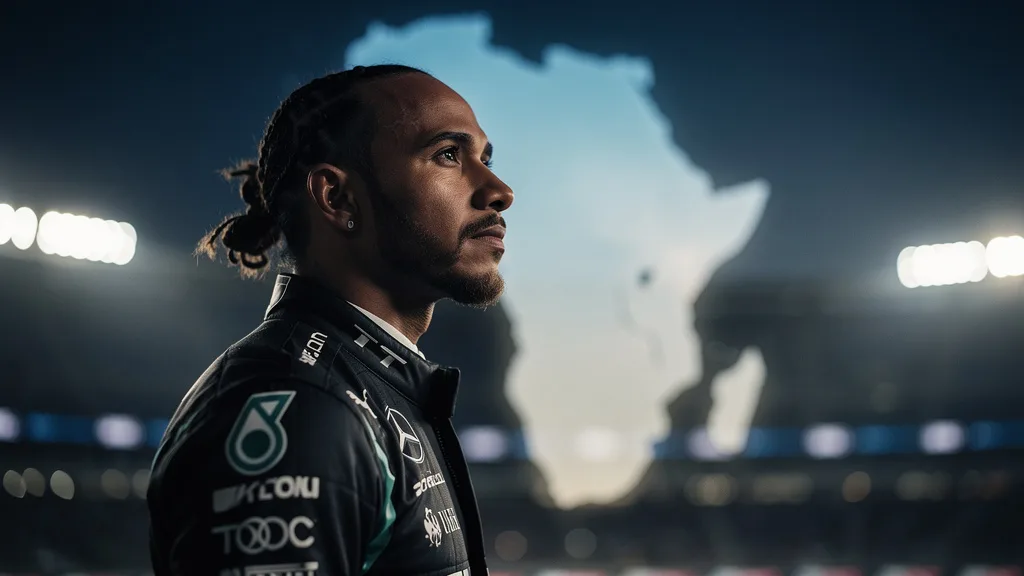
Lewis Hamilton Urges Humility as Formula 1 Explores Potential African Grand Prix in Rwanda
Seven-time world champion Lewis Hamilton has called for a perspective of humility as Formula 1 continues to explore the possibility of returning to the African continent. With Rwanda emerging as a serious contender to host a future race, the Ferrari driver addressed the complexities surrounding the bid, particularly regarding human rights concerns that often accompany major sporting events in developing regions.
A Long-Awaited Return to Africa
The push for an African Grand Prix has gained significant momentum recently. Hamilton, who has been a vocal advocate for global inclusivity within the sport, believes that Formula 1 has a responsibility to engage with the continent in a way that benefits local communities. This development follows recent reports that Rwanda has secured a long-term deal for a 2030s Grand Prix, marking a potential historic shift for the FIA World Championship.
Speaking on the matter, Hamilton emphasized that the sport should not arrive with a sense of superiority. Instead, he suggested that stakeholders must listen to the local population and understand the socio-political landscape. According to a report by the BBC, Hamilton stated that people should “approach it with humility,” acknowledging that while there are challenges, the opportunity for positive impact is substantial.
Navigating Human Rights and Sport
The potential inclusion of Rwanda on the calendar has sparked debate regarding the country’s human rights record. Formula 1 has faced similar scrutiny in the past when expanding into markets like the Middle East. Hamilton argues that rather than shunning these locations, the sport can act as a catalyst for conversation and progress, provided the approach is respectful and collaborative.
This discussion comes at a time when the sport is undergoing various structural changes. While some focus on the geographical expansion, others are concerned with technical regulations, such as the plan for Formula 1 to restore traditional Grand Prix race distances from 2028. Balancing these logistical shifts with ethical considerations remains a primary challenge for F1 CEO Stefano Domenicali.
Current Grid Challenges
While Hamilton looks toward the future of the sport, his Mercedes team is currently grappling with immediate technical hurdles. His teammate, George Russell, is bracing for multiple grid penalties as engine reliability issues continue to plague the Silver Arrows. These mechanical frustrations stand in stark contrast to the optimism surrounding the sport’s global growth.
Furthermore, the physical demands of the current calendar remain a talking point among drivers. Recently, Max Verstappen criticized ‘unacceptable’ track conditions at the United States Grand Prix, highlighting that even established venues must maintain high standards to ensure driver safety and racing quality. As younger talents like Kimi Antonelli prioritize enjoyment ahead of high-stakes championship moments, the veterans of the grid like Hamilton are increasingly focused on the legacy the sport leaves behind in new territories like Africa.
The Road Ahead
The prospect of a race in Rwanda represents more than just a new track; it symbolizes F1’s ambition to be a truly global championship. Hamilton’s insistence on humility suggests that the success of an African Grand Prix will be measured not just by the quality of the racing, but by the integrity of the partnership between the sport and the host nation.