
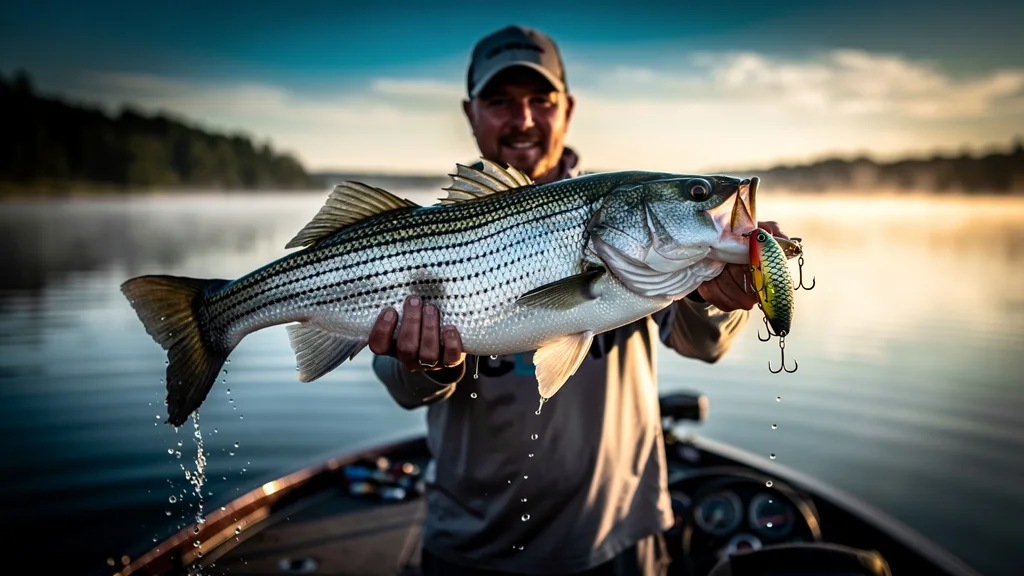
Mastering Reaction Strikes: Why Noisy Lures are Essential for Rockfish Success
Every angler has faced the frustration of a fish finder lit up with activity, only for the school below to remain completely indifferent to every offering. Whether it is a group of striped bass (rockfish) refusing to bite in clear water or fish struggling to locate prey in heavily stained conditions, these moments require a shift in strategy. Instead of trying to feed a fish that isn’t hungry, the goal shifts to triggering a predatory reaction through noise and vibration.
The Science of the Lateral Line
Striped bass are highly evolved predators equipped with a lateral line—a specialized sensory organ running from the gill plate to the tail. This feature allows them to detect minute vibrations and pressure changes in the water, helping them navigate and hunt even when visibility is poor. When traditional lures fail, anglers can exploit this biological trait by using “rowdy” lures that create significant underwater commotion.
As noted in a recent guide by FishTalk Magazine, these lures are designed to irritate the fish or mimic an injured baitfish in distress. Much like how mastering the game in sports requires understanding the technical nuances of the field, successful fishing requires understanding how to manipulate fish behavior through sensory overload.
Scenario A: Waking Up a Lethargic School
When you have located a school but they refuse to strike, it is time to switch to high-vibration lures like rattling jerkbaits or lipless crankbaits. In shallow water, a rattling jerkbait worked with an aggressive, erratic retrieve can be devastating. By ripping the rod tip hard and reeling up the slack quickly, you create a “sub-surface popper” effect. The incessant rattling often annoys the rockfish into a strike, or convinces them that a wounded meal is trying to escape.
Effective Lure Choices for Clear Water
- Rattling Jerkbaits: Best for shallow riprap and erratic retrieves.
- Twitchbaits: A great alternative if jerkbaits are snagging on bottom structure.
- Lipless Crankbaits: The classic Rat-L-Trap is a staple for its intense vibration and noise.
Scenario B: Conquering Muddy and Stained Water
When wind or rain turns the water into a brownish-green soup, visibility drops to near zero. In these conditions, the lateral line becomes the fish’s primary hunting tool. While the retrieve remains similar to clear-water tactics, lure color becomes the most critical variable. In dark water, contrast is key. Anglers should move away from natural patterns and opt for high-visibility shades like chartreuse and hot pink, or very dark silhouettes like purple and black.
Slowing down the retrieval speed is also beneficial in low-visibility scenarios. This gives the rockfish more time to home in on the vibrations. Just as testing your knowledge is essential for sports fans to stay sharp, testing different fall rates by switching jighead weights can help you find the exact strike zone in murky depths.
The Power of the Reaction Strike
Ultimately, a rockfish doesn’t need to be hungry to bite. By utilizing lures with internal rattles or adding inserts to soft plastics, you can force a reaction. Whether the fish is acting out of aggression, annoyance, or pure instinct, making a ruckus is often the only way to turn a slow day on the water into a successful outing. Understanding these behavioral triggers is a critical step in advancing your angling prowess and ensuring you never leave a school of fish empty-handed again.
Pingback: Johnson Outdoors Unveils the Minn Kota Unified Fishing System
Pingback: Simms Unveils Rip Line Pro: A New Standard for Offshore Foul Weather Gear