
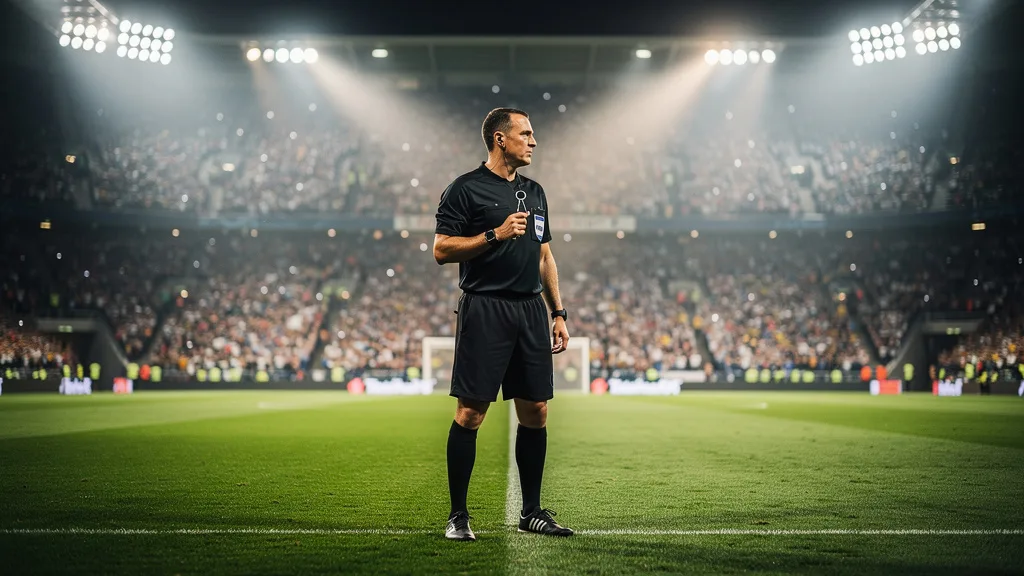
Inside the Mind of a World Cup Final Referee: Slavko Vincic Reflects on Football’s Biggest Stage
Standing in the tunnel before a World Cup final is an experience few individuals in the history of football will ever know. While players dream of scoring the winning goal, the referee carries the weight of ensuring the integrity of the world’s most-watched sporting event. Slavko Vincic, the man who took charge of the 2026 World Cup final, has opened up about the immense psychological and physical demands of officiating at the pinnacle of the sport.
The Weight of Responsibility
For a referee, the World Cup final is not just a game; it is the culmination of decades of preparation, fitness tests, and high-pressure decision-making. Vincic describes the atmosphere as electric, noting that the preparation begins long before the first whistle. Unlike the domestic league matches or even high-stakes continental fixtures, the global spotlight of a final brings a unique set of challenges where every minor call is scrutinized by billions.
Maintaining focus is paramount. In modern football, officials must balance their natural instincts with the technical support of VAR. We have seen how pivotal these systems can be in matches like when Chelsea secured a hard-fought draw against Lyon amid VAR controversy. For Vincic, the goal is always to remain invisible, allowing the flow of the game to take center stage while being ready to intervene when the rules are breached.
Handling the Stars and the Pressure
Managing world-class athletes requires a blend of authority and empathy. Vincic emphasizes that communication is key to preventing escalations on the pitch. Whether it is explaining a complex decision or managing a heated moment between rivals, the referee must act as a diplomat. This is particularly difficult when dealing with controversial moments, such as the recent debate explaining the Leah Williamson handball, where the interpretation of the rules can spark global conversation.
The physical toll is also significant. Referees at this level cover roughly the same distance as midfielders, often sprinting to stay close to the action to ensure they have the best possible angle for every tackle and handball shout. The mental fatigue, however, is what Vincic highlights as the most grueling aspect, requiring total concentration for over 90 minutes, and potentially extra time and penalties.
A Legacy in the Game
Officiating the final is the ultimate badge of honor in a career that often sees more criticism than praise. While fans often focus on transfer gossip involving European giants or test their skills with daily Premier League trivia, the men in the middle are the foundation upon which the professional game is built. For Vincic, the experience was a career-defining moment that transcends the sport’s usual tribalism.
Reflecting on the journey, Vincic acknowledges that the path to the top is long, often starting in smaller, local tournaments that evoke a sense of Scottish football nostalgia. To reach the World Cup final is to reach the summit of a mountain very few get to climb. You can view the full interview and insights from Vincic via the BBC Sport original report.